
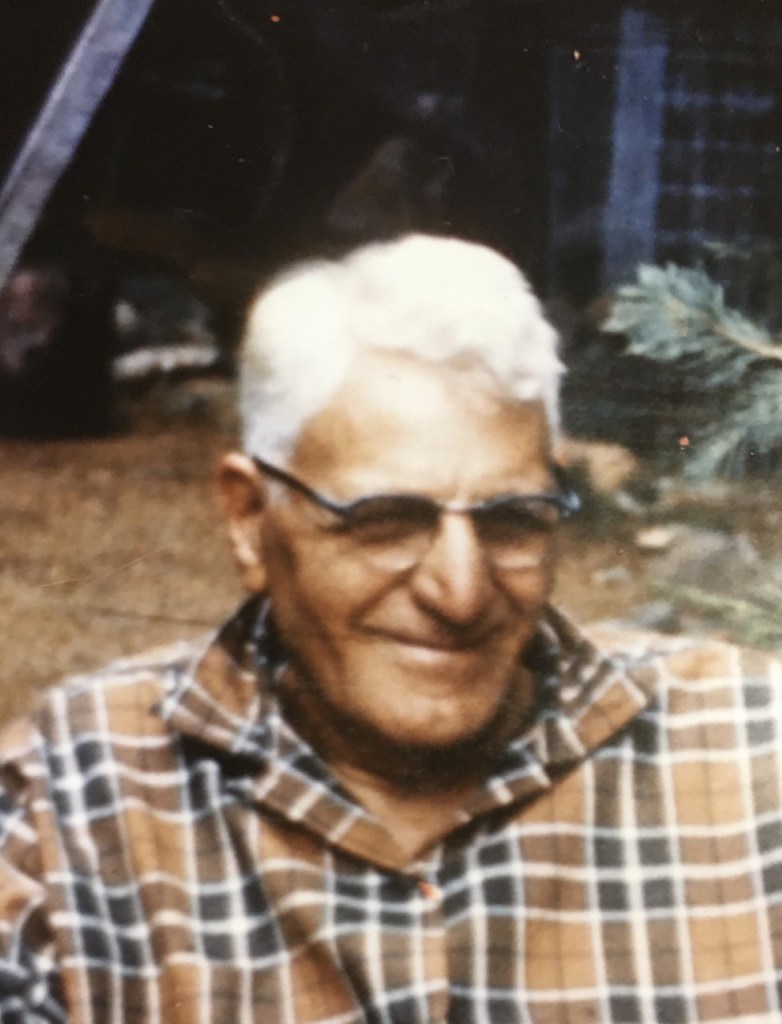
The only summer vacations I knew as a boy were to my aunt and uncle’s mountain cabin. There, my uncle, George Dozier, gave me early lessons on nature and fly fishing. I loved the new world of adventure he was sharing so much that I read books to learn even more. When I learned something beyond his teaching, I could hardly wait to share these discoveries with him.
This started with fish we were catching. Although my uncle had helped plant both Dolly Varden and Brown trout in those streams and thought he could tell the difference between them, I had trouble doing so. Then my reading alerted me to a scientific way to differentiate between the two, and soon revealed that every questionable trout we caught was a Brown Trout. Apparently the Dolly Vardens had not survived. My uncle was interested in knowing this but not overjoyed. I noted that he never again called those fish, Brown Trout, but instead, “those speckled trout”.
He also taught me about the trees that grew there. Again I found a discrepancy between his teaching and what the books taught. The Red Firs he introduced me to turned out to be Douglas Firs. Again, he received this news with less enthusiasm than I had somehow expected.
Then I got a book on birds. My aunt and uncle had enjoyed tossing their left-over rice onto the ground for their beloved Chickadees. After a little reading, I said “You will want to know that those ground birds are really Juncos.” Well, I got the impression that he did not want to know that. And there seemed to be more to this than just trading in the more beautiful name.
I was beginning to sense that when you have known something by a certain name over the years, it becomes part of you in a way I didn’t fully understand. My corrections seemed to be detracting from, rather than adding to, my uncle’s pleasure. And his less-than-enthusiastic responses weren’t giving me the pleasure I had hoped for in sharing new information with him.
Now, years later, I have become the older teacher and can more readily identify with his reluctance to be corrected by a young person with little life experience. I believe that such correction was probably harder to receive for his generation than mine, because we are already conditioned to relying on young people for computer-related help. And I have adopted a questioning style in my own teaching that invites input and new ideas from students as well as the opportunity to enjoy sharing new information. This allows the older teacher and younger student to become more like partners in the learning.
Looking back, it becomes easier to see the value in what my uncle gave me. The vast majority of things he taught were correct, and more importantly, he ignited my lifelong passions for nature and fly fishing. But perhaps most important, he never allowed my youthful corrections and lack of mature personal skills to stand in the way of the love we had for each other. Without saying so, he taught that the relationship can be more important than differences in perspective.
 Al Kyte's Life Take-Aways
Dear Al, another insightful message. Wonderful lessons learned and passed on to others.
Relationships are the core of our being. This is what Jesus taught us when He said,”Love thy neighbor.”
Plus you learned to love nature and fly fishing. Thank you.
LikeLike
Thanks Fran, You’re the best!
LikeLike
Great reading. We miss you.
LikeLike
Thanks Ann. We miss you guys too. Nancy told us how well you quickly adapted the group’s format to the changed circumstances. We couldn’t have done that. Our prayers are with you each day.
LikeLike
This was SO good and definitely one of my favorites, Dad! 🙂 Your heart for him really comes through in this! I know I’m still continually learning new things from you…💗
LikeLike
Thanks Tami. I’m learning from you too and have been for years.
LikeLike