Al Kyte's Life Take-Aways

These "take aways" are drawn from various experiences in my life including those as athlete and coach, teacher, military officer, fishing guide and author, amateur naturalist and native-plant gardener, leader of homeless outreach and family member.

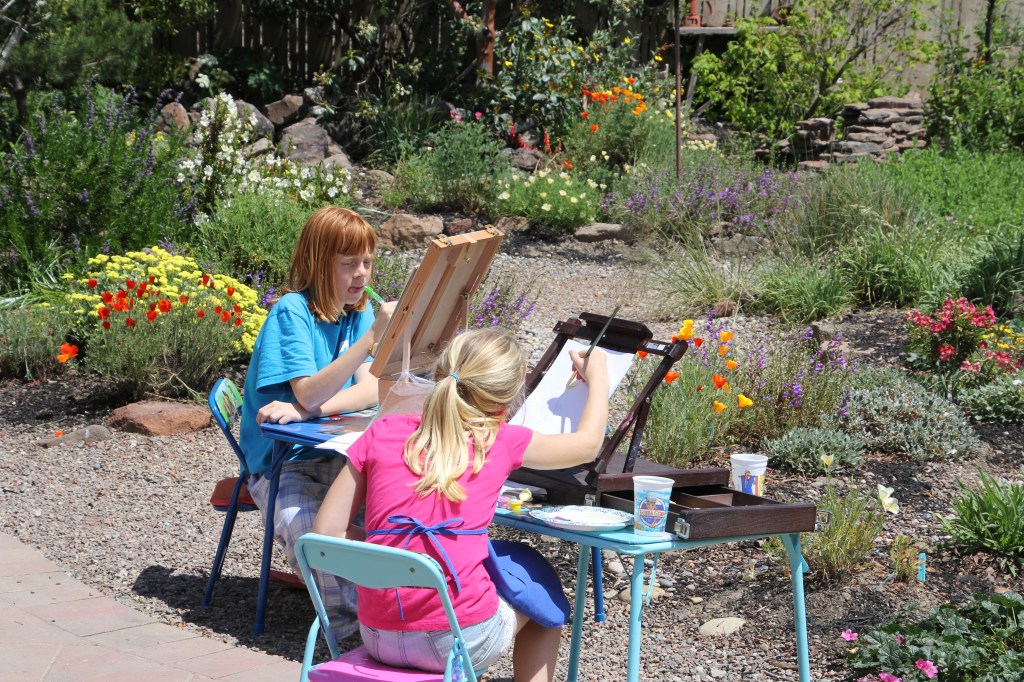
People see the world around them in different ways.  My interest in this started as a boy when I realized my sister often described in great detail things I had not even noticed.  She would have made a far better witness than I.  This difference I attributed partly to her interest and training as an artist in portraying detail and partly to her personality.
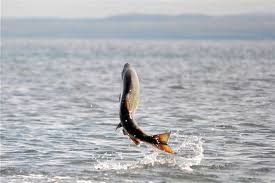
This belief that our interests affect what and how we see was reinforced while fishing for salmon next to a renowned gymnastics coach.  Catching his first few salmon, he excitedly began to describe their jumps in gymnastic terms, the type and number of rotations, flips and twists he was seeing.  As he marveled at the variety in those jumps, I was just becoming aware of that variety—and I had been catching salmon for years.  His training in analyzing gymnasts moving through the air had given him a unique appreciation for such moments.

Scientists often emphasize the importance of observing as well.  In his book, “The Art of Teaching”, Gilbert Highet gave an account of Joseph Agassi teaching young scientists.  Agassi would place a dead fish in front of each student to observe and jot down everything they could about that fish.  Then he would ignore them for several days before asking each student what he or she had learned.  His most common response to their observations was, “No, that’s not right.” He would ask again after they had spent a few more days observing that fish.  Only when satisfied with their thoroughness would Agassi move students on to his next task.  

Some visual characteristics are not easily changed through teaching.  When evaluating quarterbacks, football coaches note a player’s arm strength, but sometimes overlook how well that quarterback sees the field—movements of players both downfield near his receivers and at the same time those much closer rushing in to tackle him.  I believe that the ability to consistently make good decisions under such pressure is mostly inborn and instinctive.

Observing life out in nature has always drawn me in.  As a young man I took pride in walking fast along trails.  But birding made me realize that my fast pace was preventing me from seeing some birds and animals.  Butterflies often returning to the same plant taught me that even the walking itself could limit my views of them, and the small size of some native bees led me to use close-focusing binoculars and a telephoto lens.  So birds slowed me down, butterflies made me stop, and bees forced me to look closer. 

I believe that this slowing down process helped prepare me for a time of sitting more and yet in a way seeing more at the same time.  For example, I have seen that fence lizards not only dash from a rock to nab insects, but also dig vigorously for larva in the dirt, climb up through bushes to leap from branch to branch to catch their food, or patrol under plants to jump up to catch bees that have flown too low.  Until I sat and watched, I had no idea how varied their hunting behavior is.  Sitting, listening, and observing in a sort of “open-eyed contemplation” is a great teacher.  

I love seeing what is around me in this way.  It can lead to a time of reflecting that might even include looking back at the people and activities of years gone by, at all the good things I have and can do, and at the promises God has for those of us who have chosen to follow His lead.  I consider such slowing and reflecting to be a special gift for our advanced years that invites us to come to terms with life, appreciating what has gone well, forgiving and repenting where called for, and expressing gratitude for it all.  And that often brings with it a time of peace.   
 

“Who was the first baseball and basketball coach at Oakland’s Skyline High School?”  That’s the sports trivia question I like to ask when meeting former Skyline students, because I was that coach and few of them would know that.  I was there for only two years in the early 1960s before being recruited away to teach and coach at the University of California.  During that first year at Skyline, only one boy who had made the “All-League Team” at his former school transferred to ours.  He was a great kid but unfortunately experienced a disappointing senior year in baseball with us.  My team had a decent season, but I felt I had failed that boy in not bringing out the best in his abilities.  So at the season’s end I was surprised to receive a letter from his father expressing how much their whole family appreciated all I had done for their son, including motivating him to go on to college.  That father, by taking the time to thoughtfully write down those words under such circumstances, lifted my spirits in a way no spoken compliment could have.  Written compliments add impact by leaving a person with something encouraging to look at, think about, and perhaps build on.

Some situations are not conducive to writing down our compliments, yet we can still add a personal touch.  There is nothing more personal than taking the time to learn someone’s name.  I did this when teaching at the University of California, learning more than 300 first and last names of students each semester and chatting with students between classes.  It always surprised me how many would later ask me to write a letter of recommendation for them even though I could offer little more than a character reference.  Sadly, many of them had no relationship with any professor in their major field whose recommendation would carry more weight in job placement. 

I found that taking the time and effort to learn names of people we met through our homeless outreach meant even more as many of them were living in shame.  Being able to greet them by name let them know they were remembered and valued as individuals.  Often we were able to follow this up by listening to their stories, encouraging them, praying over their specific concerns, and sharing hugs and laughter.  

Some people associate personalizing with having a name imprinted on a garment, but I use that term for trying to imprint a caring personality into my speech and actions.  Too often I have been preoccupied with tasks to be done with little regard for the other people involved.  In the Bible we read, “Let no one seek his own, but each one the other’s well being.”                                      

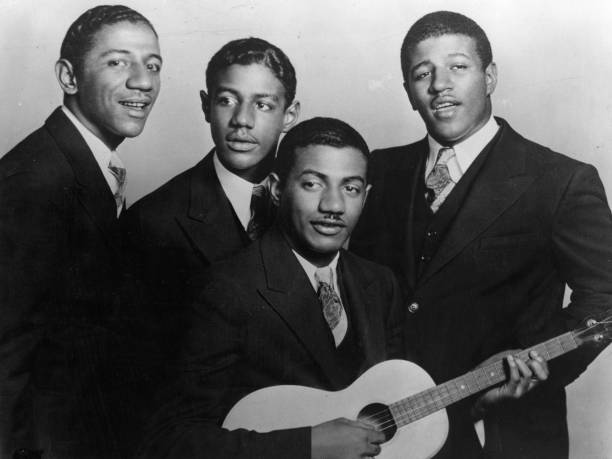
The Mills Brothers

Personalizing during hard times, such as many people have recently been going through, carries an additional opportunity to step up and be there with our encouragement.  We do well to focus on communicating topics that are uplifting and even put a smile on the faces of people who may hold a different world view than our own.  This was our country’s emphasis during the scariest times I have known, the World War II years when the armies of both Japan and Germany were advancing throughout the world.  Our mood was typified in songs such as one written then and popularized by the Mills Brothers that reminded us to “Accentuate the positive, eliminate the negative, and don’t mess with mister in-between.”  

Whatever situation we are going through, there often exists a choice of taking time to care for other people’s needs in one way or another.  I have been known for my knowledge in several areas of interest, but I would prefer to be remembered more for how I care about people than what I know about things.  I have found the old saying so often true that “people don’t care how much you know until they know how much you care.”


Our choices sometimes bring unexpected benefits.  The benefit I foresaw in choosing to landscape with California native plants was to be surrounded with plants I have enjoyed out in nature.  What I did not expect was how much those plants would mean to me when I could no longer climb mountains nor scramble down into trout streams, nor that they would grow into such a special area of refuge for animals, discovery for children, or peace for busy adults.

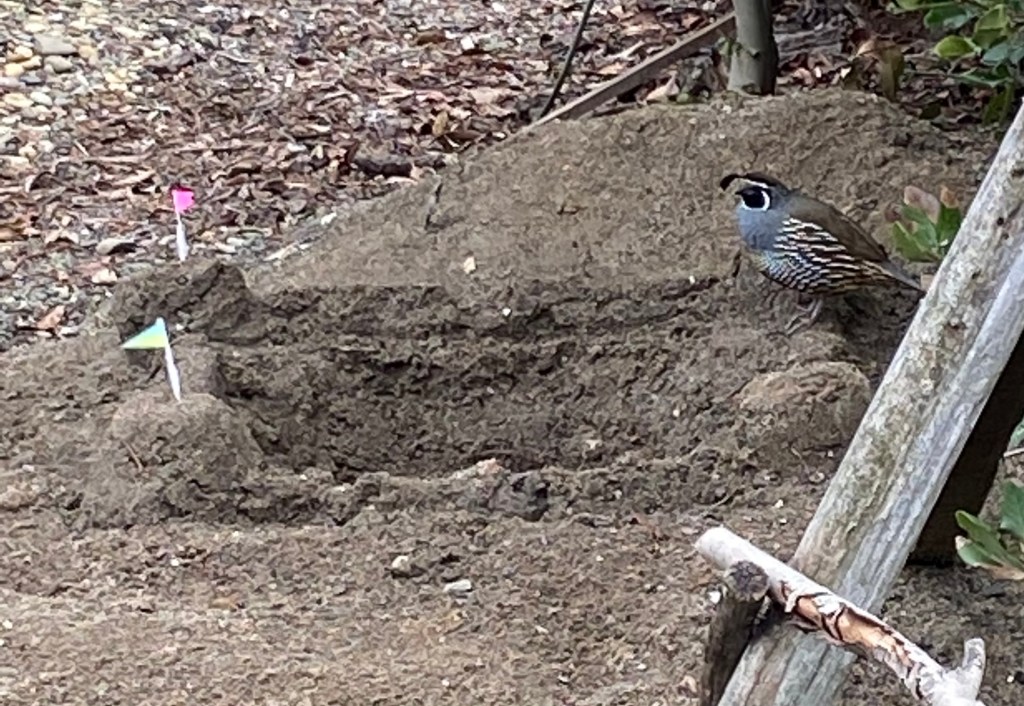
That came to me one day as I was sitting quietly in our garden.  Turning my head in response to a faint sound, I saw two quail emerge from cover, walk to a sand castle my grandchildren had built, jump up onto the castle walls, look around, then drop inside to survey the scene as if to say, “What do we have here?”  My time of peace, the quails’ curiosity, and the children’s recent fun had all contributed to that special moment.

I recalled that the sandy mound was also used to bury “hidden treasure”, fulfill certain landscaping needs, and serve as an egg-laying area for lizards.  I wondered how many of my other landscape features also benefitted all three groups—animals, children and adults.

Our water feature consists of a small stream with falls, plunge pools, riffles and a pond.  Children delight in water play activities, birds bathe, animals come to drink, and fish and turtles swim in the pond.  Both the sight and sound of the water add to an adult’s sense of tranquility.

The nearby areas of open woodland include rocky ground, low plants, shrubs, and small trees that offer various feeding, perching and nesting options for a wide variety of birds.  Children use the trails there for running, chasing, and playing catch.  And whether strolling the pathways or sitting quietly, adults welcome the open views between the small trees to taller ones beyond.

A Place of Discovery

Elsewhere in the yard is an area dominated by shrubs.  The tall manzanitas there give children a “jungle experience” where they can walk, crawl or hide under an overhead canopy.  With some pruning help, they are able to climb through several bushes without their feet touching the ground in a native plant “jungle gym”.  Together we pick the berries and prepare a manzanita cider as people have done for hundreds of years.  Adults appreciate the manzanita’s year-around beauty of fresh-green foliage and gnarled reddish bark.   Also birds and small mammals enjoy being able to feed leisurely under the overhead protection on seeds, berries and insects.

Stacked wood, rock outcroppings, and artifacts all add interest between the plants for birds and animals to perch and hunt.  The wood provides fuel for burning and a wall behind which to conceal extra gravel and other gardening materials that children dip into for their imaginative play.  Children also jump from rock to rock and use the outcroppings as a backdrop for action-figure or doll play.  Adults appreciate the textural contrast that rocks provide to nearby plants.  Artifacts such as an old pump, a wagon wheel, and mining and ranch items give children props for role playing and offer adults occasions to reflect on the way things were done in the past.

Almost every day I see animals, children or adults enjoying this natural-looking landscape, and I no longer need to travel to feel I am getting back to nature.  Although this garden has been likened to a park, it is merely the size of a typical suburban lot.  Adding to, rather than removing, natural habitat offers wonderful, important benefits to life around me, such as providing much needed help to butterflies and other pollinators in their current uphill battle for survival.  


She opened the book and out fell a piece of paper that looked to be quite old.  She picked it up and read the words written back who knows when.  I told her of the old pirate who had apparently once lived in this area and was rumored to have buried treasure nearby.  People had long looked for, but never found, a clue to that treasure’s location.  Was this his writing? 

Apparently something in those words registered with the girl because she rushed outside.  I tried to follow as best I could.  That note seemed to be leading her somewhere.  Finally I found her digging in a sandy area just as her shovel struck something hard.  Within a few moments she had uncovered a small, old-fashioned wooden chest.  She opened it to find treasure—jewelry and gold coins.  Her eyes were filled with wonder and excitement.

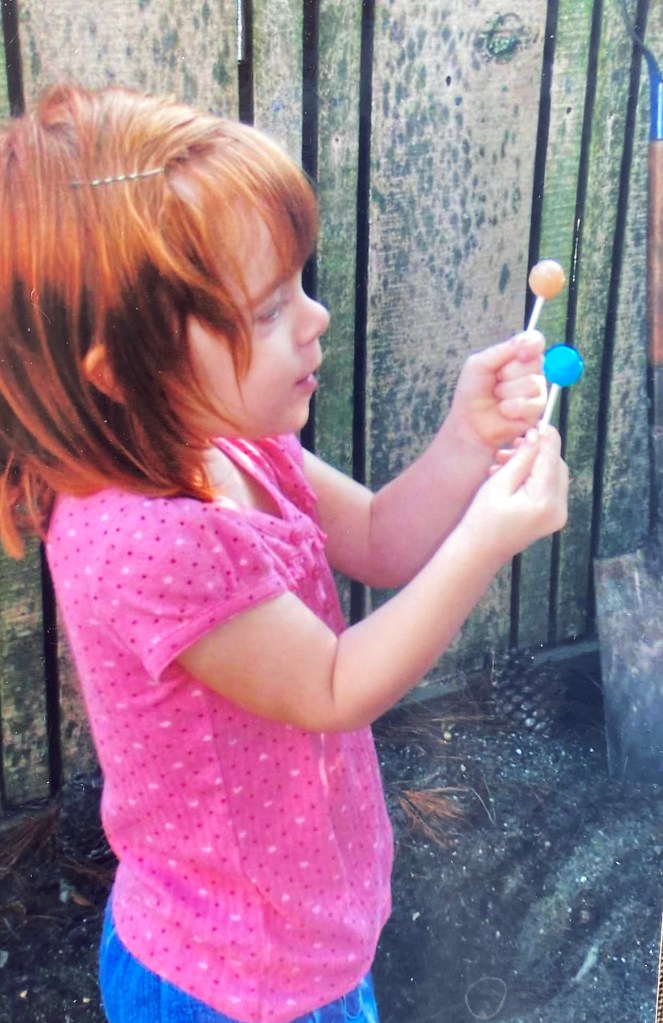
Item in this treasure box: two suckers a double blessing
First treasure hunt-Lifting a box from the sand

I witnessed such treasure hunts with both of our children and each of our grandchildren for I was the culprit who had engineered each hunt.  To give the note an ancient look I had cut a section from a brown-paper grocery bag and burned its edges.  The box was filled with cheap costume jewelry and gold coins with chocolate inside.  The excitement, however, was real.  Even after finding that their first hunt had been contrived, each of those children pleaded with me for subsequent treasure hunts.  That is how much fun they are.

I did those treasure hunts because as a child I had always wanted to experience one myself, but never had.  Even our Easter egg hunts had been indoors.  I just had to make things right for the children who came along after me.

I believe our life journey may be viewed as a treasure hunt as well in which people seem to be looking in different directions.  Some seek their treasure through possessions.  Others put their energies into big events or trips to distant places.  Still others seek expertise in some activity or hobby.  I have been fortunate to find pleasure in each of these ways, realizing that each has added dimension to my life.  But they all have fallen short in being the treasure I have sought.  I have been drawn more to changes that are going on within me, something not dependent on possessions, events or expertise but through which I can find contentment and peace whatever I might be going through.

When taking time to examine my beliefs, one question I have asked is “What does God expect of me?”  Then I read in the Proverbs that we are to seek Him as we would seek hidden treasure, and that if we do, He will find us.  That spoke of something more than casual pursuit.

Farther along in the scriptures I read that the kingdom of heaven is likened to a treasure hidden in a field that a man finds and sells all that he has to obtain.  I recall that the famous British missionary to China, Jackie Pullinger, when teaching this parable, would ask her students “Who is that treasure so worth obtaining?”  Assuming they would have answered “Jesus”, I was surprised that most of those Chinese youths had replied, “I am that treasure”.  “How can you be that treasure?” she would ask.  “It is because Jesus suffered so much and gave up His very life out of love for me”.  They were not seeing the love relationship from our point of view but from the perspective that came first, God’s love for us.  For me this treasure includes, not only receiving His love, but also sharing it with people He has placed in my path, even if it be nothing more than offering a smile or encouraging word.   A sign in our garden reads, “The grace we have been given becomes our gift to the world.”  


The sport is called fishing, not catching, but one day I was catching more than fishing.  This was Alaska before hordes of anglers were streaming to the most remote rivers there.  That day there were only six of us on our favorite river, and the salmon were everywhere.  I hooked over 100 fish, landed two-thirds of them, and had fish on my line most of the time.  Since that day, counting fish has meant little to me and valuing each fish has meant much more.                                                                                                      

Although catching many fish generally makes for a good day, catching unusually large fish often requires more skill.  One of my favorite ‘big fish’ days occurred while casting into the surf at Christmas Island, south of the Hawaiians, in ocean water so clear you could see fish below the wave action.  As we walked along the shore, we caught a variety of fish, mostly bonefish.  Then my guide pointed to deeper water where a large fish, a trevally of about 70 pounds, glistened a brilliant blue in the sun as it cruised along slowly beyond casting range.  I switched to my other, much stiffer fly rod onto which I had already tied a 4-inch-long streamer fly.  I made a few practice casts to get line out and retrieved it into several coils in my hand.  With my line ready, I continued along the shoreline 10 to 20 feet ahead of that big fish.  I was remembering another time watching a trevally suddenly speed up in a dash toward shore to catch a small fish. I was hoping this trevally would do just that—and before long it did

Blue-fin Trevally

I placed a cast in front of that approaching fish, and when it was only about 40 feet from me, made my fly dart once.  In a flash that huge fish had it, was hooked, and bolted for deeper water.  I tightened up my reel’s drag as much as I dared, but nothing slowed that fish.  I moved high on the beach, and my guide went into the water with my line held high in joint efforts to keep it from breaking on the coral.   I had 300 yards of backing line on that reel, but when that fish stopped moving only a few feet remained.  I worked hard for the next few minutes but only gained back a few more feet before the fish succeeded in breaking me off.  I think the only way I could have landed that fish would have been to be able to follow it in a boat.  By breaking me off, it saved me several hours of hard work.  All I really lost was a photo that would have meant little to anyone but me.  I gained far more—a vivid memory of a well placed cast, an eye-filling view of an enormous fish attacking my fly, and the feel of its immense power.

Some best fishing days were about sharing the experience with special people—fishing buddies, family members, even a few famous guides and fishing personalities with whom to share ideas.  If given the opportunity to relive one fishing day, it would be a day back in the 1950s with my dad and uncle, men who I loved being around and tried to model myself after.   

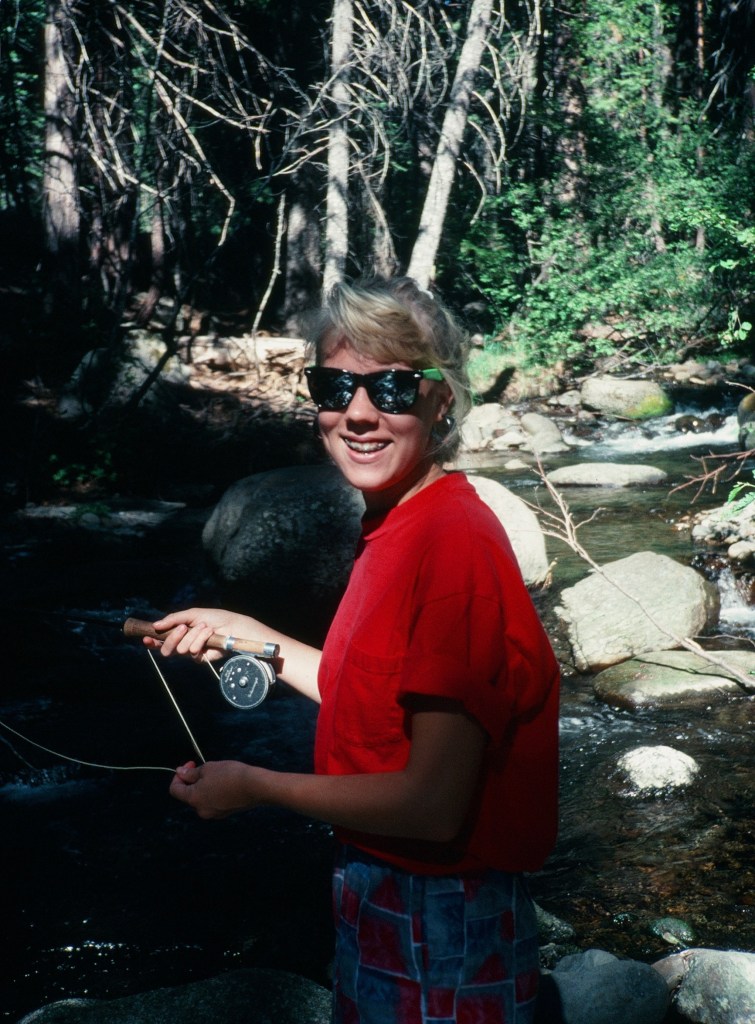
Tami on a trout stream

One of my best fishing days was with our daughter, Tami, whom I had taught to cast and catch trout in small Sierra streams.  She wanted to catch a bigger fish in Yellowstone Park but, once there, kept busy in other activities.  Before leaving, we made a last stop at Grant’s Village.  I quickly glanced at the indoor exhibits and went out the back door and down to a boardwalk I remembered that extended a ways into Yellowstone Lake.  There I discovered some trout cruising within casting range, sipping mayflies off the surface.  I grabbed my vest and fly rod out of the car, tied on a fly that matched the one the fish were taking, and quickly caught one.  Then I hurried back into the building, found Tami, and told her to come catch her big trout.  “Tami, you don’t have to put on waders or anything, just come.”  

She was wearing a stylish outfit—not something to wear fishing.  On that boardwalk I handed her my fly rod and started spotting fish for her.   With polarized sunglasses, I could see the trouts’ movements and direct her casts.  Tami caught and deftly released several of the largest Yellowstone Cutthroat trout I had seen.  My pleasure included watching the reactions of passers-by seeing an attractive, well-dressed young girl battling those big fish.

I love calling up such moments from the memory playlist in my mind.


Teaching has been my way of life, whether mentoring individuals, teaching in classrooms, coaching on athletic fields, guiding on trout streams, or speaking before large audiences.  Wherever my interests have taken root, I have soon found myself teaching.  The more I have done that, the more I have been drawn to using questions.

The least-inspiring classes and meetings I have attended have aways been lectures—someone telling me something.  Although that may be an efficient use of time, teachers have the additional obligation to help students learn to think.  Socrates taught that the most we can do to stimulate thinking is to ask a series of questions, causing a person to learn for himself.  I have used that approach in a method called “guided discovery” in which the teacher, the one with the answers, is not allowed to give an answer.  I found it frustrating not to be able to blurt out the answer.  Instead, my preparation included anticipating incorrect answers and coming up with increasingly easy questions to guide the students toward discovering each correct answer.  When a student came up with the right answer, I could move forward to the next general question.  This teaching may appear to be easy, but preparing such questions is not.

Questions get people involved

The teacher’s role is also about creating interest—motivating students.  By their very nature, questions do this by opening up a conversation to various possibilities whereas lectures often shut down any dialogue.  Even the simplest question, “I wonder why…?” can invoke a sense of mystery and excite the imagination, inviting people to look at a thing in a new way.  I love it when I see that happening.

Questions can also help afterward in evaluating the learning experience.  When teaching sport skills, for example, I have often seen when the learning occurred, the “breakthrough” moment in a performance.  Wanting to know what triggered that learning, my first inclination was to give credit to my teaching approach as most teachers would.  But eventually I realized I learned more by simply asking students, “What were you thinking when making that movement?”  One time a student answered that he had blocked out what I was saying to focus on something else.  That was humbling, but at least I found out what had worked.  I suspect that students learn by trying different things more than we realize.

More than ever I am now using questions in my everyday conversations as well.  My first intentional use of conversational questions occurred when as a shy teenager in uncomfortable social settings I learned to ask questions of the person I was meeting.  I had found that most people liked talking about themselves, which took pressure off of my having to speak.  

Sometimes when I ask questions, people act as if I don’t know much (sometimes true) and welcome the opportunity to impress me with what they know.  While this is often helpful, the people who impress me even more are those who are also asking questions, forcing me to answer at times.  The questions I love most draw out stories from another person’s life, wonderful stories I would miss if I hadn’t asked those questions.  Most people have stories, and I believe my most interesting conversations are often sitting there next to me waiting for the right question to bring them forth.  I wish over the years I had spent more time asking questions and learning to ask better questions. 


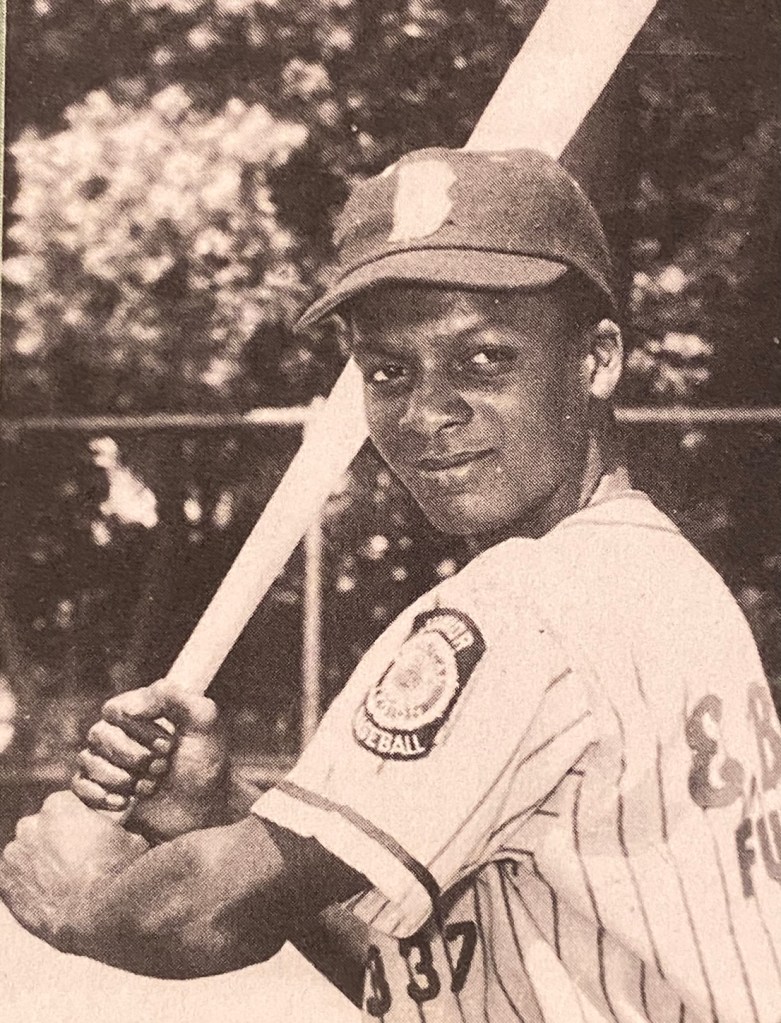
Curt Flood in High School

I began to think he could do that all day, hit one line drive after another.  That was my reaction to watching Curt Flood taking batting practice.  No matter where that pitch was in the strike zone, he was able to get the sweet spot of the bat on it.  It was beautiful.  Curt was just one of the many highly-skilled athletes my dad coached.  Well-liked, Curt was an exceptional role model for young players.  He had a great junior year on my dad’s team and was projected to  receive a $30,000 bonus to play professional baseball, big money then.  Unfortunately Curt did not grow during his senior year, so was offered only the $4,000 minimum instead.  Although considered too short, his skills were so impressive and consistent that he advanced through the minor leagues quickly to become an all-star center fielder for the St. Louis Cardinals.

Coaching gifted athletes can have its own set of challenges, such as educating a player’s family member as to what a coach expects of that player.  John Brodie comes to mind.  I played football against John in grade school and had never seen a kid our age throw the football so far.  He and I both excelled in basketball, and in high school he decided to try baseball as well.  Hitting curve balls usually takes time to learn, but John was doing it almost immediately.  He was gaining valuable experience on our junior varsity until his dad pulled him from the team in mid-season to keep his grades up for Stanford.

That summer John and I played on the same baseball team, and he was our leading hitter.  At one point his dad approached mine and said, “I’ll bet you are glad John will be playing for your team this year.”  My dad’s reply surprised us. “John won’t be playing for me.  I can’t build a team around a player who might quit in the middle of the season.”  Quick to understand, John’s dad offered, “What if I guarantee that he will be there all season?”  That is the commitment my dad had to hear.  John went on to play a key role in helping my dad’s team get to the championship game.  Later John became best known as an all-pro quarterback with the 49ers.

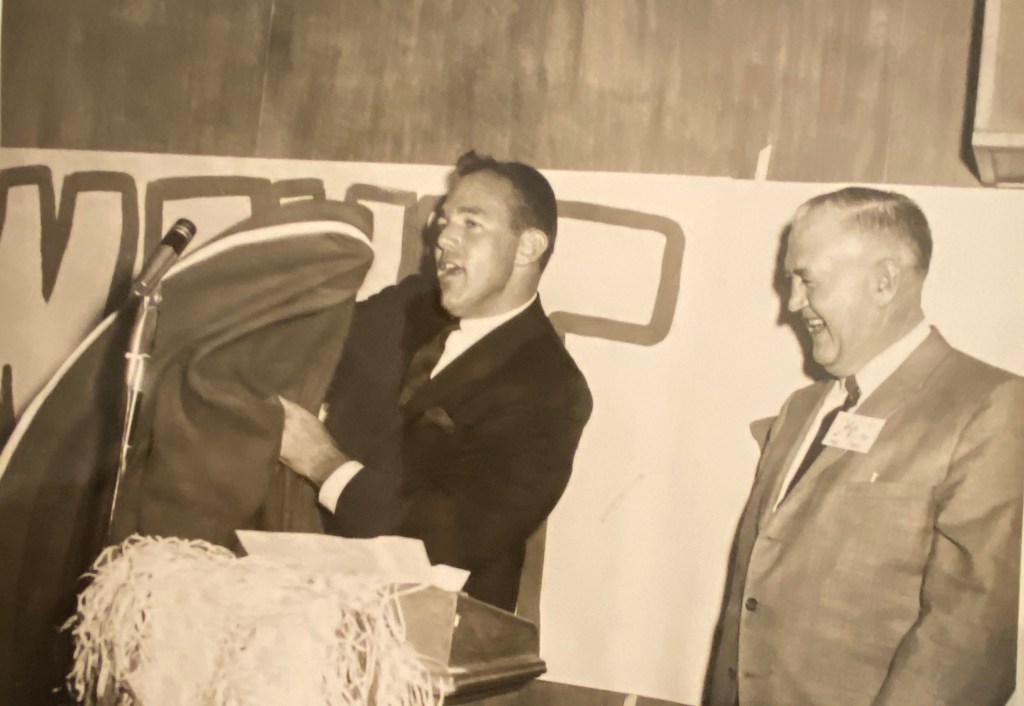
At my dad’s retirement,John Brodie presents his former coach (a Cal alum) with a Stanford blanket.

My dad taught me that the best coaches care about the athletes on other teams as well as their own.  George Powles was another widely-respected baseball coach in Oakland but at McClymonds High was assigned to coach basketball as well, a game in which he had little experience.  One day he called my dad for advice about a tall 10th grader whose coordination was so bad that balls he was rebounding were slipping through his hands prompting laughter from his teammates.  George asked my dad if he thought he should cut that boy from the team to protect him from further humiliation.  My dad advised against that because he knew that the coordination of a tall, quick-growing boy often comes slowly.  He had almost made that mistake years before with a boy named Don Lofgren who eventually made the All-City team before going on to U.S.F..  At that time, the N.I.T. tournament was the most prestigious event in college basketball.  Only the top 12 teams the country were invited. That U.S.F. team coached by Pete Newell was the only team invited from the west.  Seeded 12th and last in that tournament, U.S.F. won it all—shocking the eastern pundits.  Don Lofgren was the center on that team.

Two years after my dad’s advice, I played against that boy whose coordination had been improving.  And after two additional years at the college level, that coordination, once so bad, had  become exquisite, so good that he seemed to be blocking every shot taken.  His skill even forced a rule change that disallowed blocking shots on their downward flight.  That boy was Bill Russell who became one of the most dominant centers in the history of basketball.

My dad varied his approach to help each player reach his potential.  However, he expected them all, no matter how gifted, to abide by rules that placed team above self.  He lost championships benching “star” players unwilling to do that.  It was always about more than the game.

  Sharing Good Times

The stillness of the warm afternoon was suddenly interrupted by a wild whooping from the cabin where my uncle and dad were playing cribbage.  It was our dad’s voice as my sister and I had never heard it.  Not knowing what to expect, we ran to the sound and learned that he had just drawn a “29 hand”, the highest-scoring hand in cribbage that apparently occurs only once in 216,580 times.  As my dad relished his once-in-a-lifetime moment, my uncle was just smiling and shaking his head.  My dad loved playing cards with several men but spent far more of his leisure time with us.  His approach to discipline wasn’t always pleasant for me, so sharing good times added that all-important loving dimension to our relationship.  

One thing he and I shared was an interest in sports.  The old timers said my dad could have played major-league baseball, so I appreciated that he never put pressure on my performing well.  He simply provided opportunities to play and offered occasional suggestions.  He supplemented his income by working as the summer playground director at our local high school.  The summer I was 14, I tagged along.  My favorite game there was “Army Ball”, a modified version of baseball adapted to competition between two-player teams.  In a 9-inning game, each player batted at least 15 times and had frequent opportunities at fielding batted balls—much more action and fun than regular baseball.  The field of play was restricted to a narrow area of about 20 feet wide so that most balls might be caught by one of two players—the pitcher or the outfielder playing somewhere behind him.  Any ball swung at was an “out” if not falling within that narrow area.  If a ground ball got past the pitcher or was mishandled by him, it was a “single”.  If the hit landed in certain designated areas it was a “double” or a “triple”.  If it hit the window screens of the building beyond our field, it was a “home run” unless caught off the screen by the outfielder for an “out”.  If the batted ball went even farther onto the roof, it was “three outs”, because we had to stop our game to retrieve the ball.  With extra players challenging the winning team, we played all day, changing teams if one was winning too much.  This game was always fun for me, but most fun when my dad and I were on the same team.

Our lunch break included a walk to a nearby market where my dad would buy a cantaloupe and pint of ice cream.  With the melon cut in half and ice cream replacing the scooped out seeds, it made a special treat for us to share.  

He and I sat together some evenings, listening to programs on the radio, a few years before T.V.. Saturday mornings were my favorite time as my dad and I always got up early while my mom and sister were enjoying sleeping in.  He would make our breakfasts, and there was no hurry.  A quiet man, this was a time he would tell me stories from his past.  It was like he was opening a book to the adventures of a different world in which he had lived.  It was wonderful.  I felt so privileged to be invited into that.  I now realize how important such times were in providing opportunities to unwind, something even more needed in today’s stress-filled world.

I’ve learned that some of the best moments in life are those sharing activities we love with people we love, starting with family members.  People talk about getting to the causes of our cities’ problems, but I know from years of mentoring addicts and ministering to homeless people that the absence of good fathering has to rank high among those causes.  I have the utmost respect for any man who has survived the pain of cruel or negligent fathering to become a caring, nurturing father himself.  In Malachi, God says He will turn the hearts of the fathers to the children and the hearts of the children to their fathers.  I pray for that now more than ever.


California is not known for dramatic seasonal weather swings.  Such changes here are most apparent in the mountains where I have particularly enjoyed the onset of Fall.  Even on the sunny days, I could feel that Winter was not far away.  The air was cooler; summer crowds, departed; skiers, not yet arrived; animals, more in evidence; and fish, still hungry.  Perfect. 

Our garden also takes on a different look and feel in the Fall.  Not only are the sunny days cooler but the the air is fresher as well.  Our deciduous trees and shrubs start dropping their leaves to reopen views I haven’t seen since early Spring.  

In this season I enjoy spending time adjusting the number and placement of rocks in my various outcroppings in an unending effort to further enhance the natural look of the landscape throughout a garden not intended to resemble a typical garden.  I am as interested in the beauty between the plants as in the plants themselves.

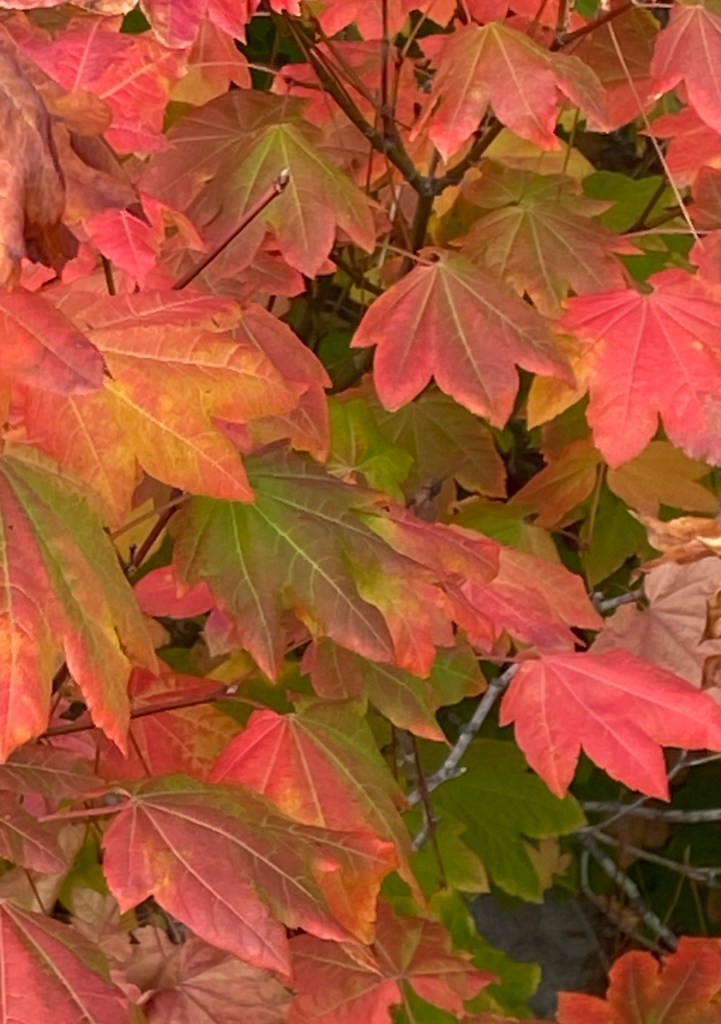
Vine Maple
Toyon

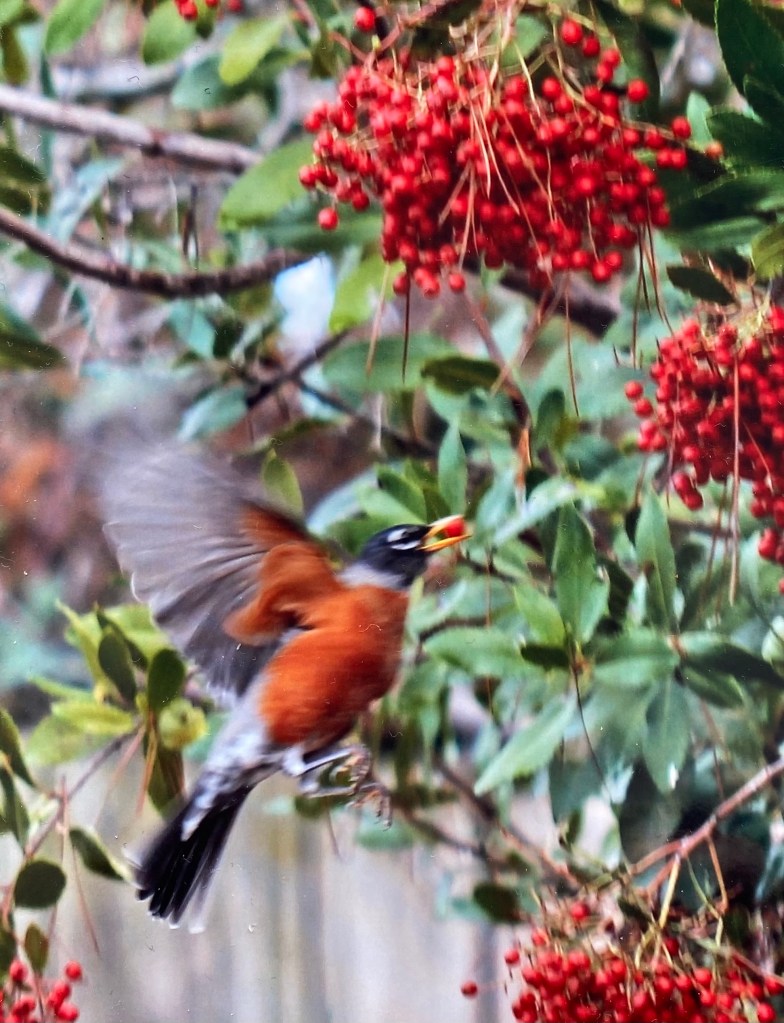
There are fewer blooms than in the Spring and Summer, but color nonetheless.  The cooler nights have helped paint my Vine Maple leaves in reds, oranges and yellows bringing an attractive contrast to the year-around, fresh-green foliage of nearby manzanitas.  And the red berries of the Toyon add their own Fall color—until the robins and cedar waxwings begin their annual feeding frenzy, marking for me the arrival of Winter.  When I see that happening, I try to drop whatever I am doing to sit out among those Toyons where I’ve seen upward to 30 birds intently rushing back and forth past me in the air, some within arms reach.  It’s exciting in the middle of a feeding frenzy, even as an observer.

Dogwood-Spring
Dogwood-Fall

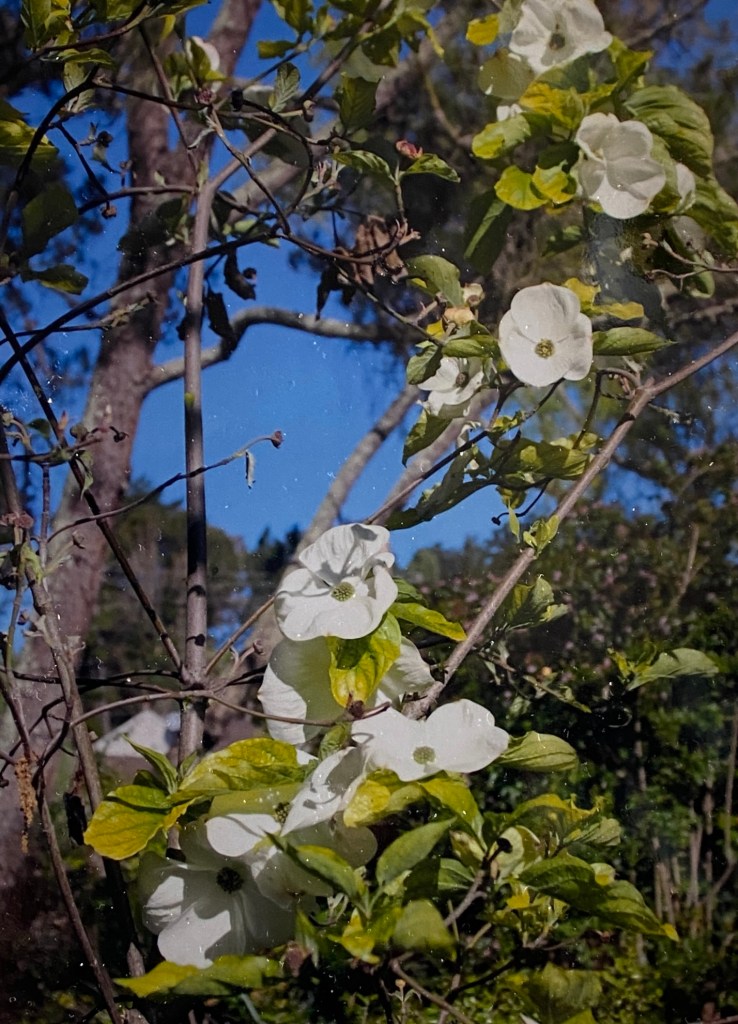
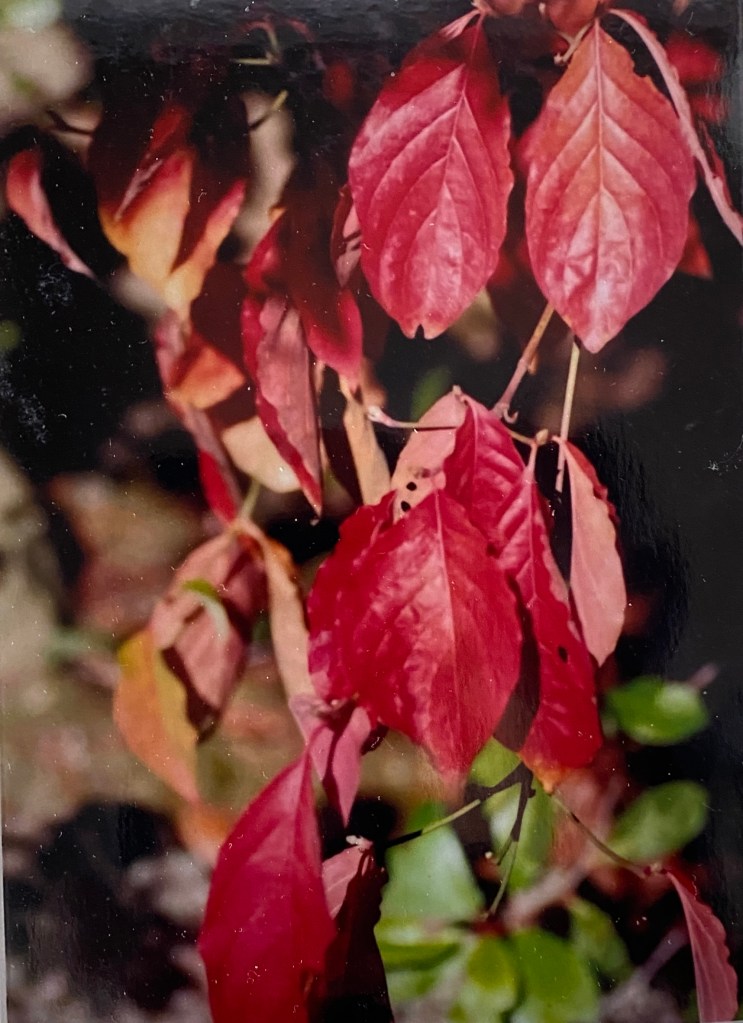
Among the other colorful leaves of Fall are the red leaves of my Mountain Dogwood.  This plant blesses us twice a year with beautiful color.  In the Spring I look forward to its lovely white flower heads.  This showy beauty reminds me of the exuberant outward beauty of a young person in the Spring of life.  Yet such beauty in flowers and people typically fades with time.  But in the Autumn of life when many plants have become brown and withered, that dogwood’s entire foliage can turn a brilliant red.  This reminds me of the deeper beauty of an older person who, in spite of trials and difficulties endured, has chosen to remain positive in outlook, even giving off a joy that lifts the spirit of everyone around. This is the beauty that gives me the example to follow in the years still before me. 

I am thankful for such people, the mountain dogwood, and the Fall season itself and regard them as beautiful gifts from a personal God.


          Al Kyte

When first considering coaching as a career, I read what some of the most highly regarded coaches had to say about their experiences.  What stuck with me was that so many of them placed an emphasis on teaching values.  My dad taught his teams to play to win and they did win 22 championships, but he also maintained that the values you taught were even more important.  I got a painful reminder of that after he saw my first basketball team play.  That team had already won a game against a bigger, more talented team, and I was beginning to believe the favorable press clippings about my coaching.  On the day my dad watched, we were pulling another upset when my players made a few critical errors and let the game slip away.  In a huddle during the last minute I was urging them on but also chewing them out.

Later that night my dad said, “It’s none of my business…”  I immediately sensed this wasn’t going to be good.  He continued, “…but you were hard on those boys.  They played over their heads, and when they made a few mistakes, you jumped all over them.  Those are young boys many of whom will be playing for you next year.  You might ask yourself why you went into coaching.  When I went in to coaching, it wasn’t as much about making better basketball or baseball players as about helping those boys become better people.”  At that moment I realized I was becoming the type of coach I despised, and I hadn’t even seen it coming.   

He told me that when this country was changing from being mostly rural to more urban, educators wondered how our youth would still be able to learn the important values of rural life.  Their answer was to include sports in school life as a way of teaching such values.  But what values? 

Of the many values of rural life, I believe the most obvious is hard work, starting early in the day.  Most coaches do encourage a “work ethic” by praising those players who are the first in the gym and the last to leave.  Just as it takes work over time to prepare for a harvest, it takes practice over time to develop sport skills.  And teacher/coaches also encourage their players to work hard in their classes as well.  Hard work on a farm also means everyone there is held responsible for doing their assigned chores.  Such teamwork, when taught in sports, enables a group that plays as a team to sometimes defeat a more talented group that doesn’t. 

Doing farm chores often leads to the habit of trying to fix things yourself.  This becomes important in the back country when there is no one else to help.  Such self-reliance also cultivates an admirable outlook in athletes that asks “How can I help?” instead of “What can you give me?”  This may be the most difficult rural value for coaches to teach and among the most neglected.

Other related teachings of rural life such as helping needy people in the community, honoring spoken commitments, respecting the law and dealing with difficult seasons can be taught as sportsmanship by coaches who emphasize respecting officials, opponents, and rules of the game, helping teammates, winning humbly, and losing gracefully. 

As I look at the values of city life today including the impact of our computerized life, I believe there is now more of a need than ever before to teach values that help build strong character.   It seems that each generation needs to be taught that the character we bring is at least as important as what we do.  Today’s coaches may know somewhat more about teaching sport skills than in past years, but in the bigger picture of life I believe those old coaches had it right.