
People see the world around them in different ways. My interest in this started as a boy when I realized my sister often described in great detail things I had not even noticed. She would have made a far better witness than I. This difference I attributed partly to her interest and training as an artist in portraying detail and partly to her personality.
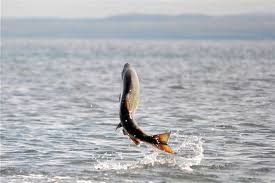
This belief that our interests affect what and how we see was reinforced while fishing for salmon next to a renowned gymnastics coach. Catching his first few salmon, he excitedly began to describe their jumps in gymnastic terms, the type and number of rotations, flips and twists he was seeing. As he marveled at the variety in those jumps, I was just becoming aware of that variety—and I had been catching salmon for years. His training in analyzing gymnasts moving through the air had given him a unique appreciation for such moments.
Scientists often emphasize the importance of observing as well. In his book, “The Art of Teaching”, Gilbert Highet gave an account of Joseph Agassi teaching young scientists. Agassi would place a dead fish in front of each student to observe and jot down everything they could about that fish. Then he would ignore them for several days before asking each student what he or she had learned. His most common response to their observations was, “No, that’s not right.” He would ask again after they had spent a few more days observing that fish. Only when satisfied with their thoroughness would Agassi move students on to his next task.
Some visual characteristics are not easily changed through teaching. When evaluating quarterbacks, football coaches note a player’s arm strength, but sometimes overlook how well that quarterback sees the field—movements of players both downfield near his receivers and at the same time those much closer rushing in to tackle him. I believe that the ability to consistently make good decisions under such pressure is mostly inborn and instinctive.
Observing life out in nature has always drawn me in. As a young man I took pride in walking fast along trails. But birding made me realize that my fast pace was preventing me from seeing some birds and animals. Butterflies often returning to the same plant taught me that even the walking itself could limit my views of them, and the small size of some native bees led me to use close-focusing binoculars and a telephoto lens. So birds slowed me down, butterflies made me stop, and bees forced me to look closer.
I believe that this slowing down process helped prepare me for a time of sitting more and yet in a way seeing more at the same time. For example, I have seen that fence lizards not only dash from a rock to nab insects, but also dig vigorously for larva in the dirt, climb up through bushes to leap from branch to branch to catch their food, or patrol under plants to jump up to catch bees that have flown too low. Until I sat and watched, I had no idea how varied their hunting behavior is. Sitting, listening, and observing in a sort of “open-eyed contemplation” is a great teacher.
I love seeing what is around me in this way. It can lead to a time of reflecting that might even include looking back at the people and activities of years gone by, at all the good things I have and can do, and at the promises God has for those of us who have chosen to follow His lead. I consider such slowing and reflecting to be a special gift for our advanced years that invites us to come to terms with life, appreciating what has gone well, forgiving and repenting where called for, and expressing gratitude for it all. And that often brings with it a time of peace.
 Al Kyte's Life Take-Aways