Al Kyte's Life Take-Aways

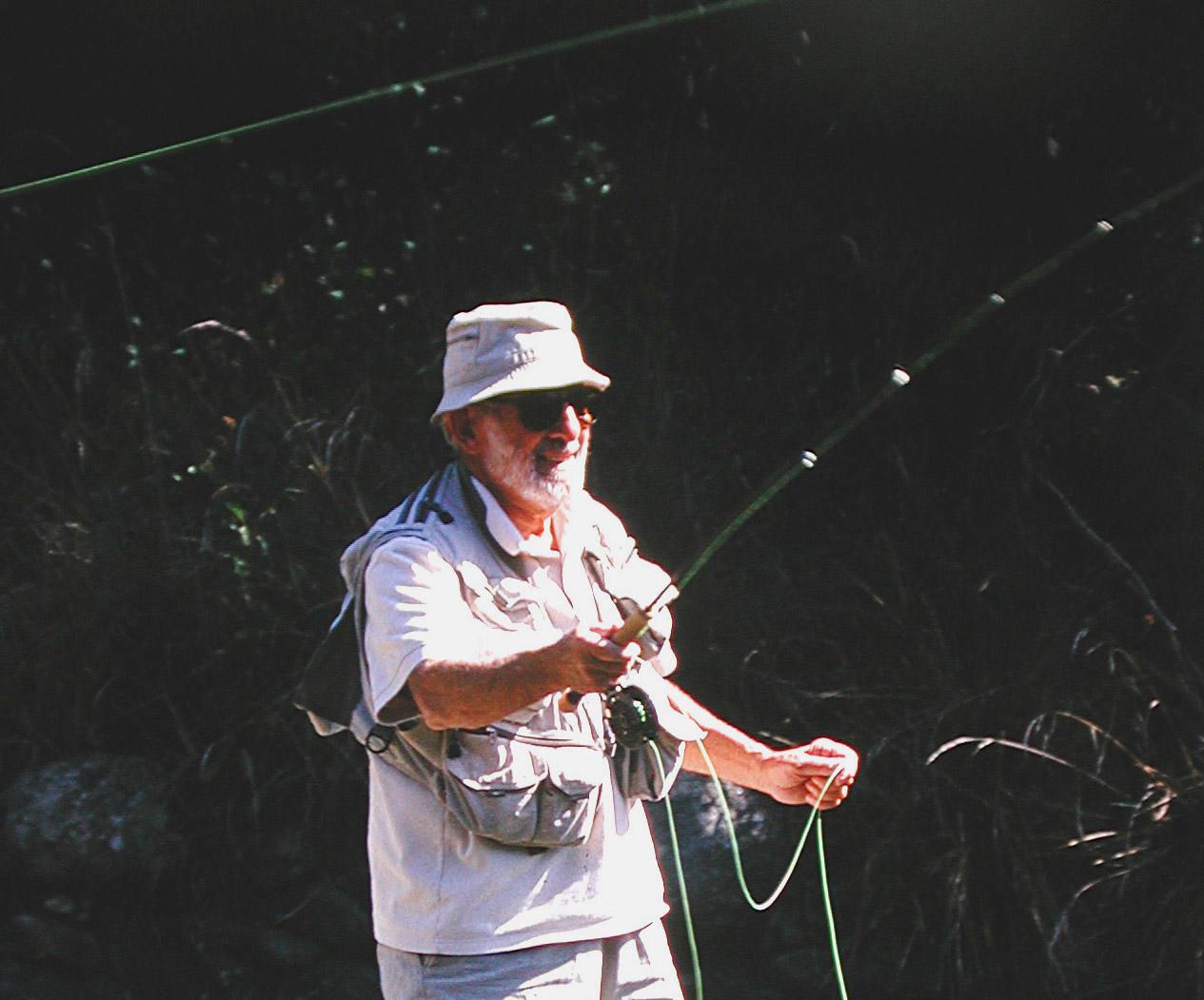
These "take aways" are drawn from various experiences in my life including those as athlete and coach, teacher, military officer, fishing guide and author, amateur naturalist and native-plant gardener, leader of homeless outreach and family member.

Baseball was part of my boyhood experience, and I was blessed with the ability to continue competing in that sport throughout high school and college.  Then I turned to coaching.  In my lifetime I have taken thousands of swings with a bat.  However, there were only two that broke windows and brought unexpected reactions.
The first of those swings followed a brief episode playing with a basketball in our front yard.  Somehow I lost control of the basketball and was horrified to see it hit and crack one of our living-room windows.  When the cost of replacing that window was determined, I didn’t see a penny of my allowance for the next five weeks.

Soon baseball season arrived and again I was playing in the front yard, this time armed with a bat and ball.  On one errant swing I fouled the ball off and heard the sickening crash of it going through a window—the same window as before.  Again I trudged inside to face the music saying,  “It looks as if I’ll be losing my allowance for five more weeks.”  My dad replied, “No, you won’t.  You already paid for that window.  I had been putting off replacing it, but with that gaping hole through the middle I can no longer put it off.”  My dad was sometimes tough, but always fair—at times surprisingly fair.

Years later, when sharing baseball stories with a young man I was mentoring, I was reminded of another swing—a long home run I had hit over the right field fence in Alameda’s Washington Park.  There were other home runs, including a memorable one against U.S.C., but I believe this one was the longest ball I ever hit.  I didn’t hit many home runs nor strike out much either because I was more of a contact rather than power hitter.  If I saw a pitch coming over the inside of the plate, I got the bat out in front and pulled it.  But if the pitch was coming over the outside of the plate, I simply went with it, driving the ball to the opposite field. 
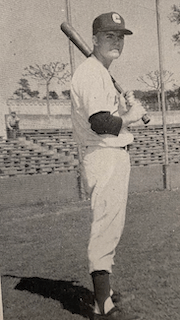
Anyway, on that day in Alameda, the pitcher threw me a change up that didn’t lose enough speed to be effective and stayed up in the strike zone as well. He couldn’t have given me a better pitch to hit, and I got all of my body into that swing. It sailed well over the fence and was later estimated to have landed 420 feet away. For me, that was as long as it got.

A few days later, we learned that a man living across the street from that park had called to find out who had hit the ball through his front window and broken a vase in his living room.  Strangely he seemed happy about the whole thing.  Then he explained, “I’ve been paying insurance on that window for 30 years and finally get to collect on it!”  People are interesting.

This is not unlike life itself where sometimes we foul up and sometimes we come through—as if getting a timely hit.  My dad always said, “If you have two strikes and the pitch is close, don’t risk going down with the bat on your shoulder.”  So I believe we do well to grasp our opportunities by at least taking our best swings.  And if someone nearby swings and strikes out, we have a different opportunity—to offer encouragement and try to lift someone’s spirit.  

           

Sometimes it’s the unusual occurrence that comes to mind when I reminisce—even about days spent fishing.  From the 1970s through the 1990s, I took frequent trips to the upper reaches of the Sacramento River to fish and guide.  I was often drawn to a particular stretch of water where a steep, rocky shoreline forced the flow around a huge bend, narrowing to form a series of the most beautiful trout pools in the area.

This dog looks like the one on the river

There was only one obstacle to my fishing those pools.  There was a cabin back on the flat land on the inside of that curve within sight of the water.  An old man lived there with an impressively large watchdog that would start barking loudly and incessantly as soon as he became aware of anyone’s presence on the river.  So ferocious was that dog’s behavior that I would immediately start backing off from my fishing so as to be elsewhere when he reached the river.  When approaching that water to fish, I learned to move slowly and quietly, hiding from view of that cabin as long as possible.  I hoped to fish through the first three pools before that dog became aware of my presence.  Succeeding in that would typically result in at least one very large trout taking my fly before the call to retreat.  

There came a day that was different.  I had fished through the first two pools without alerting the dog, but had caught no fish either.  The third pool was the best one and had never let me down, so I knew I was about to catch a nice fish.  I was wrong.  Surprisingly the dog had not yet seen me, so for the first time ever, I fished the fourth pool which I found to be in full view of the cabin.  At that point I knew something was not right.  I reeled in my line and did what I had never done before.  I started walking toward that old, wooden building.  Still, no dog.

At the cabin there was no sign of life.  Peeking into an opening that had been a window, I scanned the one-room interior, now stripped of furniture and other possessions.  The old man must have died or for one reason or another could no longer live there.  And what had happened to my longtime adversary, that ever-watchful dog?  Suddenly I was overcome with a sadness, an unforeseen sense of loss.  I began to wish I had known that old timer and learned from how he had managed to live on that remote bend in the river.  I found myself regretting that I was so often preoccupied with catching fish that I failed to pick up on some broader perspective right there before my eyes but soon to be gone.

And it dawned on me why the fishing there had always been so good.  It wasn’t due primarily to my long experience and skillful techniques after all.  That dog’s vigilant presence, that had made my days there so uncomfortable, not only had protected his companion from intruders but had also protected “my fish” from so many other anglers who had backed off sooner than I or had decided to avoid that bend altogether.  But now, with no watchful deterrent, the fishing had clearly deteriorated.  So it was my enemy that had been most responsible for my having so many exceptional fishing moments there.  As I thought about that, I began to wonder how often the obstacles in our lives are beneficial to us in ways we are slow to see.   Maybe, when circumstances become challenging, I need to shift my focus to looking for silver linings.


As a young military officer I was ordered to Camp Pendleton in southern California and, once there, was warned that my regimental commander was a harsh disciplinarian to be avoided whenever possible.  However, one day I saw him approaching me in a situation where there was no avoiding him.  I noticed that his skin was so reddish it looked as if he was about to explode in anger.  I knew I was about to be chewed out for something, perhaps about my uniform or demeanor, but all I had to do was salute him and say, “Good morning, sir.”  Yet I was anxious, hoping he would simply return my salute and say “Good morning” as the senior officer does.

As he drew close, I gave him my best salute and said my “Good morning, sir.”  To my surprise he smiled, returned my salute, and replied, “Good morning, sir.”  I couldn’t believe it.  He had called me “sir”, a sign of respect reserved for the senior officer.  Suddenly I felt ten feet tall. 

A few years later on a Sunday afternoon Barb and I were visiting her parents, and her dad, the manager of a big plant there, was showing us around that factory.  As we walked through the empty halls, we were approached by a short, grimy-looking man who was probably so low in the hierarchy of employees that he had to work when no one else wanted to.  I believe he did his best to quietly slip past us unnoticed, but Barb’s dad wasn’t having any of that.  He knew that man’s name, greeted him warmly, and introduced him to us as if we were meeting the king, making a point of how important he and his work were to the plant’s operation.  That man brightened visibly and seemed to stand up a little straighter.  I thought to myself, “Now that’s leadership.” 

Bob Kanerva, Barb’s Dad, was gifted at blessing people

A few years later at church, God spoke to my mind. “You have only one thing to focus on here for the next few months–blessing people.” So as people gathered together, I would look at their faces to find someone who seemed to need encouragement. I remember going up to a woman acquaintance and complimenting her by saying, “You really have a beautiful smile.” She replied, “Really? No one has ever said that to me.” I was shocked because her smile was so unusually beautiful that I thought she might be tired of hearing about it. I realized that many of us, particularly us men, don’t compliment people nearly enough. On another day, I said something similar to someone else, and that person said, “Thank you for saying that. I’ve heard it before but really needed to hear it today, because today I’m hurting inside.” I believe God was teaching me that He gives us these complimentary thoughts about people to use to bless them, not just to keep to ourselves.

Some years ago our family started a birthday tradition of having each person around the dinner table say something he or she particularly liked about the person being celebrated.  I realized that some of these blessings were unexpected and might never be expressed if not done so on those occasions.  

The scripture, 1 Peter 2:17 starts with the words, “Honor all people…”.  I believe that when you do that unexpectedly, it takes on additional power in lifting people up and transforming them for the time ahead.  We all need those encouraging moments.


The only summer vacations I knew as a boy were to my aunt and uncle’s mountain cabin.  There, my uncle, George Dozier, gave me early lessons on nature and fly fishing.  I loved the new world of adventure he was sharing so much that I read books to learn even more.  When I learned something beyond his teaching, I could hardly wait to share these discoveries with him. 

This started with fish we were catching.  Although my uncle had helped plant both Dolly Varden and Brown trout in those streams and thought he could tell the difference between them, I had trouble doing so. Then my reading alerted me to a scientific way to differentiate between the two, and soon revealed that every questionable trout we caught was a Brown Trout.  Apparently the Dolly Vardens had not survived.  My uncle was interested in knowing this but not overjoyed. I noted that he never again called those fish, Brown Trout, but instead, “those speckled trout”.

He also taught me about the trees that grew there.  Again I found a discrepancy between his teaching and what the books taught.  The Red Firs he introduced me to turned out to be Douglas Firs.  Again, he received this news with less enthusiasm than I had somehow expected.

Then I got a book on birds.  My aunt and uncle had enjoyed tossing their left-over rice onto the ground for their beloved Chickadees.  After a little reading, I said “You will want to know that those ground birds are really Juncos.”  Well, I got the impression that he did not want to know that.  And there seemed to be more to this than just trading in the more beautiful name.

I was beginning to sense that when you have known something by a certain name over the years, it becomes part of you in a way I didn’t fully understand.  My corrections seemed to be detracting from, rather than adding to, my uncle’s pleasure.  And his less-than-enthusiastic responses weren’t giving me the pleasure I had hoped for in sharing new information with him.   

Now, years later, I have become the older teacher and can more readily identify with his reluctance to be corrected by a young person with little life experience.  I believe that such correction was probably harder to receive for his generation than mine, because we are already conditioned to relying on young people for computer-related help.  And I have adopted a questioning style in my own teaching that invites input and new ideas from students as well as the opportunity to enjoy sharing new information.  This allows the older teacher and younger student to become more like partners in the learning.

Looking back, it becomes easier to see the value in what my uncle gave me.  The vast majority of things he taught were correct, and more importantly, he ignited my lifelong passions for nature and fly fishing.  But perhaps most important, he never allowed my youthful corrections and lack of mature personal skills to stand in the way of the love we had for each other.  Without saying so, he taught that the relationship can be more important than differences in perspective. 

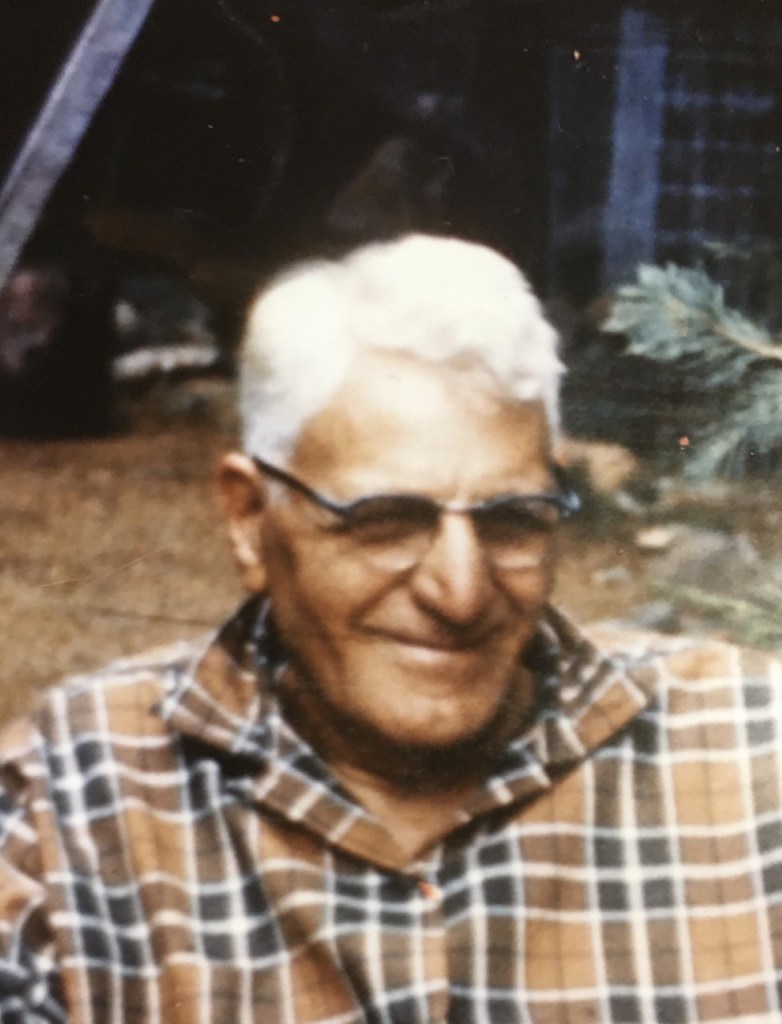
George Dozier

Snakes have always fascinated me.  As a boy, I often picked up harmless ones and even received a few bites from gopher snakes that sometimes resemble rattlesnakes in their actions and appearance.  Unfortunately that sometimes gets them killed by people who don’t know they are harmless and quite beneficial in controlling rodents.   

We never saw rattlesnakes at our uncle’s cabin 4300 feet high in the Sierra, and were led to believe that it was too high in the mountains for them.  Yet a few years later, I saw my first rattlesnake at a higher elevation yet, above 8000 feet.  Apparently their presence is more dependent on habitat than elevation.  I have since seen a number of rattlesnakes and learned to let them be as long as there is no immediate danger to people.  I have even seen them on cold, spring mornings in a state of torpor, completely unresponsive to being tapped by my fly rod.

My most exciting encounter occurred in the desert country around 29 Palms, California.  As a military officer, I had been assigned a night’s lodging in a tent in the midst of many other tents.  As I settled in, I was sitting on a cot reading while heating some water with which to shave.  There was no floor in those tents, just desert sand.  At one point, a movement at the edge of my vision caused me to look in that direction where I was shocked to see a sidewinder rattlesnake coming across the sand directly toward me.  Desperately I looked around for something to hit it with.  Then I rose and moved off to one side, grabbing up a board that someone had been using to keep his feet out of the sand.  Moving around behind that snake, I brought the board down hard on it and without letting up on the pressure dragged it out of the tent.  When I did let up on the pressure, the snake had already been seriously injured.  After killing it, I buried the head so no one would get bitten by reflex action.  I am still amazed that the snake had found its way into a tent surrounded by so many other tents.

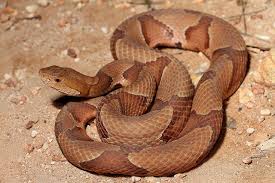
Copperhead

I never expected to see a different species of poisonous snake, but I did on a visit to Arkansas.  I had been paid to teach fly casting to some certified instructors from that part of the country, and their leader took me fishing one afternoon.  While wading along the shoreline, I spotted a snake swimming toward me—a copperhead.  Stepping out of its way and seeing no immediate danger, I watched until it disappeared into the shoreline brush.  The next morning I dropped in to the local fly shop to talk to the owner, a man whose unique way of expressing himself invariably put a smile on my face.  When I told him about that snake, he told me about a morning he came to work to find a copperhead coiled up on his shop’s welcome mat.  In his typical droll manner, he looked at that snake and said, “That’s not going to be good for business”.  Apparently he grabbed a broom and started sweeping the snake toward some nearby shrubbery.  Only after he had given it a half dozen ‘sweeps’ did the snake start striking at the broom.  He added, “Now if that had been a cottonmouth moccasin, it would have struck at the very first ‘sweep’, and directly at me, not the broom.”  

A couple of days later, I was looking at a big pool in a stream running through the college campus where we were holding our instruction, thinking that water would provide a good place to teach certain fly casting techniques.  When a groundskeeper happened by and warned me that cottonmouth moccasins had been seen in and around that pool, I thought of that shop owner’s story and decided to find some other place to teach.  Yet I did return to that pool a few times hoping to see one of those snakes.  Fascination is like that.  

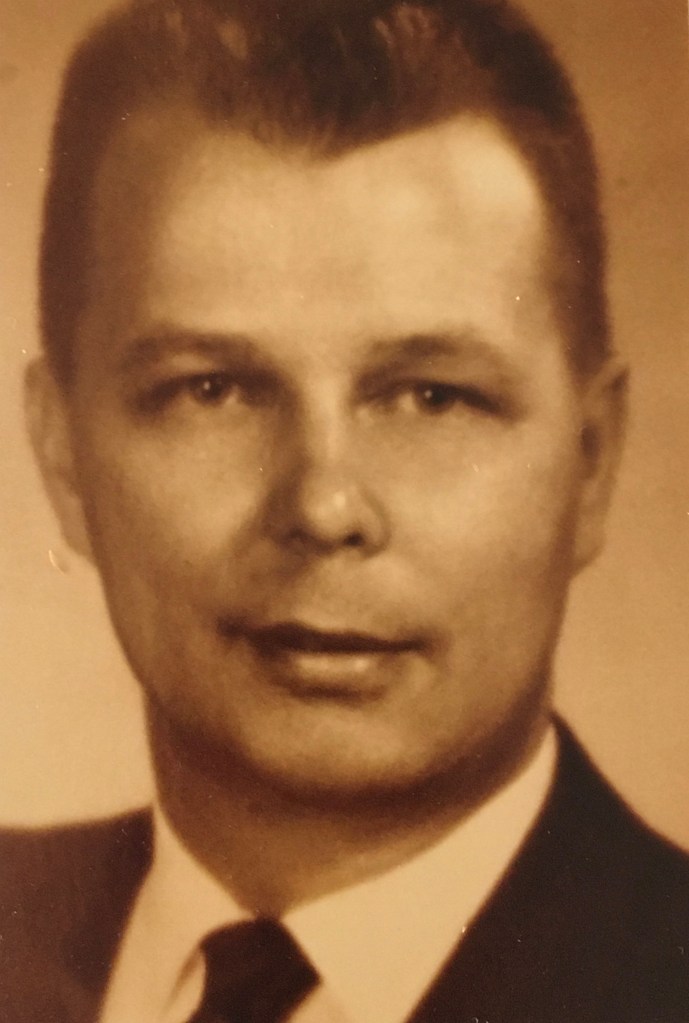
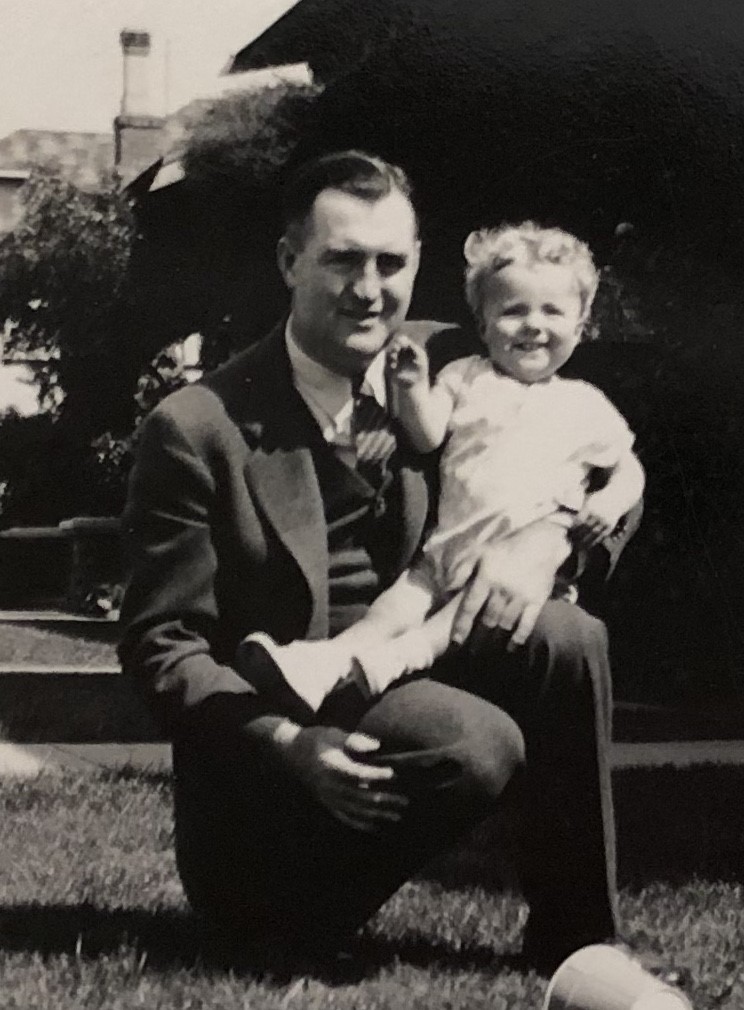
When did I become a man?  Manhood is something I never sought.  Yet I remember as a boy being surprised by how eager some of my friends were to ”become a man”.  I think I was always content with wherever I was in life.  And I don’t recall my dad ever giving me advice on becoming a man.  For the most part he taught by example.  He was big, strong and highly respected.  He taught, counseled and coached two generations of high school students over four decades.  Wherever we went in Oakland, people greeted him warmly and often told us how he had touched their lives.  He set the bar for manhood very high.

Al Kyte Sr. and Jr. 1936

As a young man in my 20s, after college and three years of military experience, I still hadn’t given much thought to having reached manhood.  Then one day I did.  As a graduate student at the University of California, I went into a post office to purchase stamps for mailing questionnaires and told the post office attendant what I needed.  He looked at my name and asked if I was related to the Al Kyte at Oakland Tech High School.  Accustomed to hearing that question, I said,  “Yes sir.  He is my father.”  I had expected another glowing account of my dad’s impact, but that man said nothing more.  Perhaps his experience with my dad had not been a pleasant one.  

When almost completed, our transaction was interrupted by another postal worker needing my attendant’s help with something.  So my attendant went away for a moment and when he returned looked quickly at his paperwork and informed me that I owed $8.00.  “No, sir.” I said,  “I believe you have misplaced the decimal.  I owe you $80.00.”  Back then, that was a lot of money to me.  He looked again at his paperwork and said, “That’s right.”  Then he looked me square in the eye and added, “Well, that figures.”  Apparently honesty is what he would have expected from the son of the Al Kyte he had known.  Somehow I recognized that as being a defining moment in which I had lived up to my parents’ expectations. 

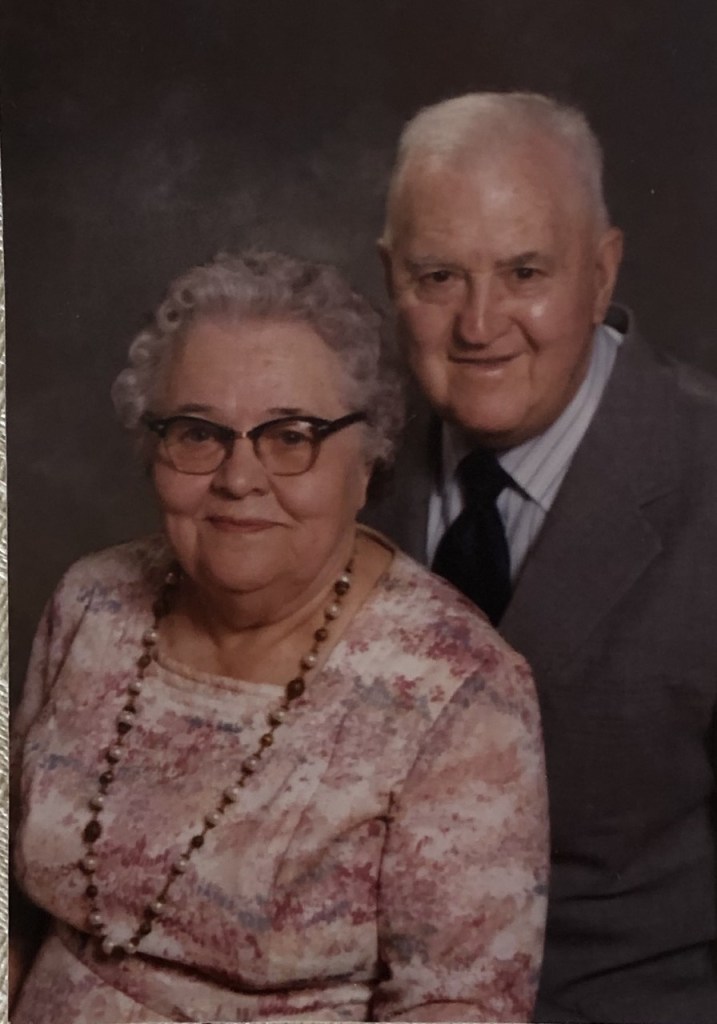
Al Kyte Sr. and wife Bertha.

On that day, it became clear to me that manhood in our family was not about being big, well-liked, or macho. It was all about character—integrity, responsibility, humility, compassion—traits to keep aspiring to throughout life. And although my dad set the example, my mom and some other people reinforced and added to those traits. I believe that what we do in life and particularly how we do it flows outward from who we are becoming. I have mentored men in recovery who have never had even one responsible adult to help guide their growth and choices. I’ve been extremely fortunate.


For more than 20 years Barbara and I gathered volunteers to join us each month in making about 100 lunches, putting each in a bag along with a water, socks, and a hygiene kit, and taking them out to the streets of west Oakland.  Most often we went to a park near a popular recycling center where it typically took us an hour to give out those lunches to people, many of whom were homeless.  But one morning was different.

After we had handed out roughly half of the lunches, there were no more people coming by.  In all our years on the streets we had never experienced that.  It was as if a curfew had gone into effect with no one being allowed out on those streets.

We would have to go elsewhere to give out the remaining lunches, but where?  We thought back to a time when we had given out lunches at other nearby parks.   Someone suggested one on 25th street.  I thought about it and said, “There are some good people who hang out there, but they aren’t as needy as those in some other parks.  No, we’re not going there”.  I have since tried without success to recall the conversation that followed, because somehow we ended up at that park. 

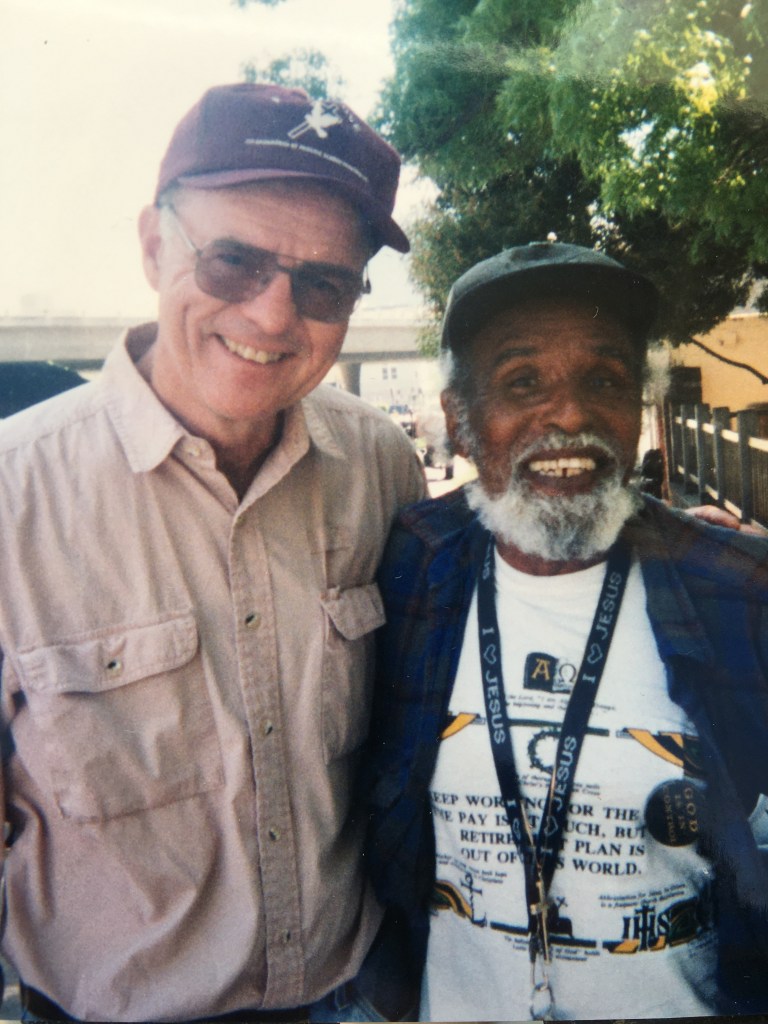
On arriving at that park, we saw a surprising number of people we had enjoyed being with before.  As we gave out lunches, we found ourselves joking and laughing with them.  At one point I happened to notice a man watching us intently from a ways off with what seemed to be a critical expression.  Finally, he came over and asked, “Are you in charge here?”  I said, “We believe Jesus is in charge,” but then added, “What can I do for you?”

He told me he was a pastor and that some of the people there were in his flock.  He pointed to an upstairs window of a nearby house and said he had just been up in that room praying.  He told us he had recently become discouraged because no one seemed to care about his people.  He said he had just finished crying out to God, “If I can’t see a sign of your love, I’m going to give up my ministry.”  At that moment he heard a commotion down in the park, moved across to the window, and saw our group arriving.  He came outside to get a closer look at what we were doing.

He said, “I saw your provisions and praying.  But what really drew my attention was the way you were hugging my people, laughing and having fun the way old friends do.  Apparently you have been here before.  Everywhere I looked in that park, I saw God’s love being poured out.  It was exactly what I had just been crying out for.  I am now so excited I can’t wait to keep serving my Lord.  Thank you for being here today.”

Was that a divine appointment?  I thought about it.  Who was it that so abruptly and unexpectedly stopped the flow of foot traffic, forcing us to move?  Who overrode my decision not to go to that particular park?  Who gathered together so many of the people we had previously loved being with?  Who got us there at the moment that pastor was crying out to God?  Was that all merely coincidence?  I know you could not convince any of us that it was accidental.  We believe God had a purpose for us that day and was set on accomplishing it—that Jesus truly was in charge.

Al and the pastor


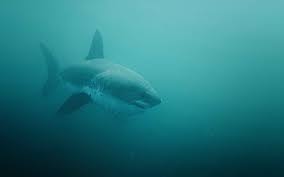
There are potential dangers in many of the things we do, even in activities we enjoy.  When fishing with my mind focused on what I am doing, I am nevertheless also alert for resident snakes, bears, sharks or other dangers.  Yet just knowing such dangers are nearby heightens the excitement and feeling of adventure.  In a clash of opposing impulses, this sense of adventure has sometimes edged me forward even as my common sense was holding me back.

When I started fly fishing in saltwater, sharks didn’t seem to pose any danger.  We saw only skinny, small ones on the shallow bonefish flats.  One day I saw a slightly-larger shark, maybe four-feet long, swimming by in the deeper water out from the mangrove-lined shallows where I was wading.  Our guide had gone back to get our boat and my fishing partner was wading along behind me about 50 yards back.  Neither of us had seen any fish for some time, and I felt like casting to something.  So, for practice more than anything else, I cast my bonefish fly about 10 feet in front of that shark and started retrieving it.  I knew that shark would not be interested in such a small fly, so was surprised to see it speed up.  

Then I felt, rather than saw, something take my fly, so set the hook.  It was not the shark, but a smaller, foot-long pompano I had hooked.  Apparently the shark had been following it and now, sensing its stress, moved forward to grab an easy meal.  I was already backing up toward shore and reeling the fish in when I saw the shark turn on it.  I lifted the rod, line, and hooked pompano up out of the water.  To my further surprise, the shark jumped into the air and snapped its jaws shut—barely missing the smaller fish.  I continued backing up toward shore while reeling in, and was treated to a repeat performance—the shark turning on the fish, me lifting the fish out of the water, and the shark clearing the water, again snapping its jaws shut on air.

Now on the bank, I swung the pompano ashore as the shark turned toward it again, saw me, and veered away.  I spent some time reviving that pompano, hoping to give it back enough energy to be able to fend for itself when released.  My fishing partner, after witnessing that entire scene, approached and said, “You never have a video camera when you really need one.”

Another day on the Bahamian island of Abaco, I walked out to fish a deep spot along the shoreline directly in front of our lodge.  I had cast a sinking line out and waded knee-deep to the edge of the drop-off into deeper water.  As I was giving my line time to sink, I scanned the water from right to left, then started back to the right before jerking my head back to the left.  My eye had caught some subtle movement.  There, making a slow, stealthy approach directly toward me along that drop-off, was a heavy-bodied shark about six feet long.  In two quick steps I was back on shore.  Wading two-feet deep had always seemed safe until then.  Close call?  Maybe.

On yet another day our boat had re-entered the ocean after we had fished on an estuary of South Andros.   As we turned to follow the shoreline, the weather had become overcast and windy with waves treating us to one of those uncomfortable, “butt-bouncing” rides.  I typically keep a camera ready, but in such gray conditions didn’t see how there could be any photo worth taking.  So I went against my own rule and put the camera away under my slicker.

A few minutes later our guide slowed the boat as we watched a long, dark shadow pass by directly in front of us.  Our boat was 14-feet long, but that shark was easily longer.  Even in that somber lighting, a photo of that black shadow crossing the front of our boat would have been fun to show people.  Why hadn’t I at least kept a disposable camera handy?


I caught my first fish on a fly in the 1940s and within a few decades was teaching, speaking, guiding, writing and consulting on fly fishing.  What I did that most influenced fly casting instruction here and abroad was my bio-mechanics research—both on distance and styles of fly casting.  That work opened the door to exchanging ideas with many of the world’s premier fly-casting instructors.  One I was close to was Mel Krieger who often picked my brains about teaching as I was picking his about casting.  I think that interaction helped both of us approach our potential as leaders in the sport.  Mel loved being in front of people teaching them fly casting, and they loved his passion as well.  We often taught fly fishing schools together, but the time I would most like to have been with him, I wasn’t.  So for this story I have to rely on others.  

On that day, Mel was the featured casting instructor at a fly fishing school in the Rocky Mountains.  As he was explaining a cast to the students on the lawn there, Mel was holding his fly rod with the line dropping to the grass slightly behind him.  At the end of his fly line was a length of thin monofilament line we call a leader with a small piece of yarn knotted to its end to represent the fly. Thus students could practice casting without any worry of hooking themselves.  

Two of the the other teachers waiting to give hands-on casting help to the students were entomologist, Dave Donahue, and casting expert, Tim Rajeff, both fun-loving men.  They had taught frequently with Mel and knew what he was going to say next and how long it would take.  At one moment during Mel’s explanation, Dave reached down to the grass to capture a resting bumble bee by its wings.  Out of view behind Mel, Dave got Tim’s attention and whispered something to him.  Tim smiled and then walked up close enough to Mel to pick up his leader when Mel was looking the other way.  Tim was able to take that leader back farther out of Mel’s view without him being aware of it, snip off the yarn fly from the end of the leader, and quickly tie a slip-knot loop in it.  Then together Tim and Dave worked to slide that loop over the head of the bumble bee and tighten it up.  Dave then walked back toward Mel and at the right moment placed the leader and its attached bee on the grass close to where the yarn fly had been.  Fortunately the bee was content to continue sitting on the grass as Mel concluded his remarks.  

Then the moment came for Mel to demonstrate the cast he had been describing.  With characteristic grace and skill, he deftly moved the rod to lift the line into the air as he had done so often to start his backward and forward casting movements.  But this time something was different.  His yarn fly had come to life and was initiating its own flight patterns at the end of his line.  I knew Mel’s expressions well and could imagine his look.  He had to be saying to himself, “What in the world is happening here?”  

Mel’s students had seen what was going on behind his back, but no one tipped him off.  I believe it is just too much to expect of people to interrupt something that might prove so entertaining.  What Mel thought about all this, I never heard.  Had it happened to me, I like to think I would have been able to join in on the laughter, but honestly, I’m not sure how I would have reacted.  As recognized experts, we would just as soon have these moments happen to someone else.  But, oh, how I would love to have seen that.  


I‘m thankful that God has various ways of reaching out to us.  Sometimes He reveals something to me as I read His written word or touches my emotions during a worship song.  Often I believe He uses the words or actions of people to encourage me.  Yet even when people are not around in the silence of prayer or out in nature, I often sense His presence.  One such time occurred years ago as I was fishing up a clear mountain stream.

It was my favorite weather that day, low 70s with a slight breeze.  I was fishing upstream, making a few casts then taking a few steps before casting again.  In wading against the current I would study the placement of rocks in the stream ahead to prevent falling.  As I was doing that, my attention was momentarily drawn to a small but unusually beautiful rock on the stream’s bottom.  It was far more brilliant than any of the rocks around it and in that sunlight shone like a bright jewel.  Putting aside my focus on fishing and moving up to that rock, I reached down to lift it from the water.  When I held it up, I was startled to see that it was no longer brilliant.  Although I had seen that happen before, I was nonetheless stunned by how much color had been lost.  In my hand that brightest of all rocks now looked like so many others.

As I stared at that rock, I sensed God impressing something on my mind:  “Son, often you look at yourself and at other people as you are now looking at that rock—as being ordinary.  But I see you and all my people in the beauty you saw in that rock before lifting it from the water.  I see you through spiritual waters in the beauty I created in you.  And from this day forward I want you to start seeing yourself and other people as I do.”  So for years now I have tried to do just that.  When I remind myself that we are all one in God’s loving act of creation, that beauty seems easy to find.

As I have continued to walk and fish along mountain streams, I have picked up other rocks that have struck me as unusually beautiful.  Every few years I pass out a basket of those rocks to people I am teaching.  I ask each person to take a rock that he or she is drawn to.  Then I let them know that each of those ordinary-looking rocks was selected from many others because of its unusual beauty.  And I tell them what God revealed to me on that stream those many years ago.

I have since learned that trying to see people through God’s eyes sometimes means seeing them in a potential they have not yet realized.  I believe that God gives us uplifting thoughts about people for the purpose of encouraging them, not just keeping those thoughts to ourselves.  Such encouragement can change everything, especially for a young person who hasn’t had much.